Showing posts with label Exodus. Show all posts

Tuesday, January 29, 2013

Day 29: Exodus 37, 38, 39 and 40


When Moses set up the tabernacle, he put the bases in place, erected the frames, inserted the crossbars and set up the posts (Exodus 40:18).

During their nine months camped at Sinai, the people of Israel have gathered materials, woven fabrics, tailored priestly garments, and built the tabernacle and everything that goes with it. Their accomplishments are a testimony to the benefits of working cooperatively with others focused on the same goal.

All the Levites had a part in the creative process, either in construction or as craftspeople. And after the creative work was complete, there was still something significant for everyone to set their hands to.

I seriously doubt it was actually Moses who set up the tabernacle, putting the bases in place, erecting the frames, inserting the crossbars and setting up the poles. There were teams responsible for all those tasks. And yet who gets the credit? Moses.

Any good leader knows that when his team accomplishes something grand, even though he might get the credit, it’s really the people working behind the scenes who deserve the accolades. We only know the names of a scattered few craftsmen who contributed to the work of the tabernacle, but there must have been at least hundreds. Just as 90% of an iceberg sits beneath the surface of the water and is not visible to the casual observer, there are many unseen, unsung people who are deserving of our thanks when things go right.

TODAY’S MEDITATION
Who will you say thank you for (and to) today?

Monday, January 28, 2013

Day 28: Exodus 34, 35 and 36


Although this is a stiff-necked people, forgive our wickedness and our sin (Exodus 34:9).

Twice in the previous two chapters, God refers to Israel as stiff-necked. The first time (32:9) he was informing Moses on Mt. Sinai of the people’s sin in creating the golden calf. His intention was to destroy the nation and start over with a people from the line of Moses himself. Moses stood between God and the people, pleading for their lives.

The second time occurred after the dust from the first storm had settled. God told Moses he would send an angel ahead of them to drive out the present inhabitants of the Promised Land, but that because of them being stiff-necked, he would not go with them. If I were to go with you even for a moment, I might destroy you (33:5). I guess that’s what happens when an irresistible force meets a stiff-necked object.

In chapter 34 with things put right, Moses celebrates God’s mercy and faithfulness. We included his words (34:6,7) in our Day 26 discussion. Then Moses makes his request: If I have found favor in your eyes, then let the Lord go with us. Although this is a stiff-necked people, forgive our wickedness and our sin, and take us as your inheritance (34:9).

No sense in arguing; we know how we can be. Been there, done that. It may take a lifetime for us to learn to submit.

TODAY’S MEDITATION
Reflect on some occasions lately when you’ve been stiff-necked. Could it be time to submit to God’s work in your life?

Sunday, January 27, 2013

Day 27: Exodus 31, 32 and 33


Then the Lord relented and did not bring on his people the disaster he had threatened (Exodus 32:14).

1 Samuel 15:29 reads: [God] does not lie or change his mind. One of the classic attributes of God is his immutability – the idea that God does not change. Some have taken this so far as to mean that God never changes his mind, because that would prove he is imperfect – the idea that he was either wrong before or after he reformulated his opinion – picture me with a perplexed look on my face.

That kind of thinking doesn’t bode well for the Israelites. After the golden calf fiasco, it sounds like God was ready to wipe his chosen people off the face of the earth. Then Moses interceded for them and God relented. Isn’t relented another way of saying changed his mind?

When the biblical writers state that God doesn’t change his mind, they are referring to his character. His character is constant. Who God was yesterday is who God will be tomorrow. We don’t have to worry about him forgiving us today, and then taking it back a week from now, because that would be inconsistent with his character.

The Lord, the Lord, the compassionate and gracious God, slow to anger, abounding in love and faithfulness . . . forgiving wickedness, rebellion and sin. Yet he does not leave the guilty unpunished (Exodus 34:6,7).

TODAY’S MEDITATION
Ask yourself: Would I rather have a God who cannot change his mind… ever, or a God who responds to the prayers of his children whom he loves with an everlasting love? And if God does respond to his children’s prayers, what does that mean for your prayer life?

Saturday, January 26, 2013

Day 26: Exodus 28, 29 and 30


Whenever Aaron enters the Holy Place, he will bear the names of the sons of Israel over his heart on the breastpiece of decision as a continuing memorial before the Lord (Exodus 28:29).

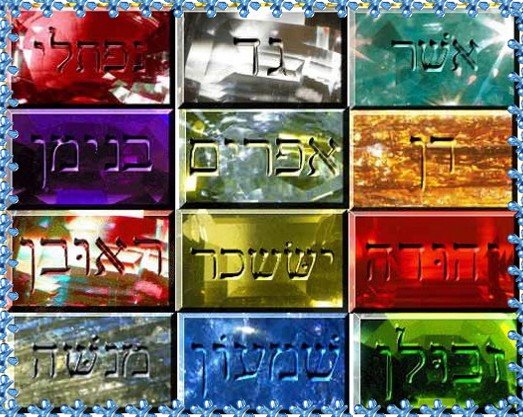
This is a good lesson for any pastor, elder, deacon, Sunday School teacher, ministry volunteer, parent, sibling, boss, employee and anyone else I’ve left out. Part of Aaron’s official high-priestly garb, in addition to the ephod (similar to a vest), robe, tunic, turban and sash, was a breastpiece. Attached to the breastpiece were twelve stones, each engraved with the name of one of the tribes of Israel. On Aaron’s shoulders were two more stones, each one engraved with the name of six tribes. Here it is referred to as the breastpiece of decision.

On those days when he might not have felt like fulfilling his duties before God, he would be reminded by the stones on his chest and shoulders that in neglecting these things he was not only affecting himself, but neglecting his responsibilities to God’s people. And when he entered the Holy Place, the stones would remind him that he was there not only for himself, but as a representative of thousands.

Maybe we don’t represent thousands when we enter the Holy Place of God’s presence, but someone needs our prayers. God has surely placed at least one name on our hearts.

TODAY’S MEDITATION
Whose names are written on your heart when you go before the Lord in prayer? Is God laying someone’s name on your heart for whom to pray?

Friday, January 25, 2013

Day 25: Exodus 25, 26 and 27


Have them make a sanctuary for me, and I will dwell among them (Exodus 25:8).

Tabernacle is a verb meaning to dwell. It can also be a noun and brings to mind different things such as the traveling tent considered the house of God in the time of Moses. It also refers to the small huts made by the Jewish people during the Feast of Tabernacles (Booths). For seven days, the Jewish people lived in small makeshift shelters to connect with their ancestors who traveled through the wilderness.

The root word of tabernacle also gives us the word tavern. In this usage, it would refer to an inn where travelers could dwell on a temporary basis.

Psalm 90:1 speaks of God being our dwelling place: Lord, you have been our dwelling place throughout all generations.

Ezekiel 37:27 reads: My dwelling place will be with them; I will be their God, and they will be my people. The bottom line is that God wants to be close to us, to live in us, and for us to live in him. If you need convincing, read this: Look! God’s dwelling place is now among the people, and he will dwell with them. They will be his people, and God himself will be with them and be their God (Revelation 21:3). What a blessed promise! We will live with God and God will live with us for all eternity.

TODAY’S MEDITATION
What would it be like if you experienced God’s manifest presence every day? Ask God to manifest his presence in your life this week that it may overflow to those around you.

Thursday, January 24, 2013

Day 24: Exodus 22, 23 and 24


If you see the donkey of someone who hates you fallen down under its load, do not leave it there; be sure you help them with it (Exodus 23:5).

Whether these words were spoken by Moses or (as many biblical scholars suggest) were expansions of a later time, they give us a picture of a nation’s developing legal interpretation.

All these laws stem from the very first: You shall have no other gods before me (20:3). Jesus spoke that commandment like this: Love the Lord your God with all your heart and with all your soul and with all your mind and with all your strength (Mark 12:30). Together with what Jesus termed the second most important commandment, it can be summed up like this: Love God; love people.

Only a life filled with the love of Christ could live up to Exodus 23:5. Don’t just shower with kindness those who can benefit you, those who will appreciate it, those who will pay it back; love your enemies too.

These are the kinds of circumstances that pop up out of nowhere... and then they’re gone. If we wait to get ready until we stumble across an enemy in need, we won’t be prepared and we’ll miss our chance. Ask God now to prepare you for occasions to come when he’ll call upon you to love your enemies. Otherwise you’ll be kicking yourself for squandered opportunities.

TODAY’S MEDITATION
When the chance arises to help an enemy (and it will), will you be ready? What do you need to do to get ready? Who have you been thinking of as an enemy whom God would have you think of as a friend?

Wednesday, January 23, 2013

Day 23: Exodus 19, 20 and 21


Now if you will obey me and keep my covenant, you will be my own special treasure from among all the peoples on the earth; for all the earth belongs to me (NLT, Exodus 19:5).

The NIV translates this verse: …you will be my treasured possession. Although the whole earth is mine… Even though I love the NIV, including its most recent revision (2011), this is one place I contend they made a bad choice out of touch with the entirety of biblical context. Of major translations, only the NIV and the HCSB choose the word although. The NCV uses even (which unfortunately communicates the same idea as although), and three translations avoid the problem by leaving out the word altogether (CEV, GNT) or substituting indeed (NRSV). The ESV, NASB and the NKJV agree with the NLT translators and use the word for.

Why the confusion? The original word can be translated both ways, and translators work from the context to determine which word fits best.

Is God saying, “I’ve chosen you because I love you the best”? Or is God saying, “I’ve chosen you because I’m going to use my relationship with you to express my love to the nations”? Using the word although communicates the former idea; the word for seems to support the latter, and fits better with the context of all Scripture.

The you in this verse is Israel. What if the you was… you?

TODAY’S MEDITATION
How can God’s love in your life overflow to others? Pray: “Lord, I’m available. Who needs you most today?”

Tuesday, January 22, 2013

Day 22: Exodus 16, 17and 18


The work is too heavy for you; you cannot handle it alone (Exodus 18:18).

Like most good pastors, Moses doesn’t see it, but he’s riding a runaway train hurtling toward burnout in his attempt to care for the people who followed him out of Egypt. They depend on him. He knows it and he’s feeling the weight of that responsibility.

Thank God for his father-in-law Jethro, who can look at the situation objectively and give the younger man (after all Moses is a mere sprout of only 80) some good counsel. We all need a Jethro in our lives. From the very beginning, God never intended us to go it alone. The Lord God said, “It is not good for the man to be alone. I will make a helper suitable for him” (Genesis 2:18).

Jethro’s advice to Moses? [Choosing capable people who can help you fulfill your mission] will make your load lighter, because they will share it with you . . . And [everyone] will go home satisfied (18:22,23).

And the apostles ran into the same thing. We will turn this responsibility over to them and will give our attention to prayer and the ministry of the word (Acts 6:3,4).

From Adam and Eve to Moses and Jethro to the Apostles and their newly appointed deacons, God has never intended us to shoulder the burden alone. That’s why he places us in the church; that’s why he puts us in a family.

TODAY’S MEDITATION
Are you taking on more than your share of the burden? Is your pastor? What could you do about it? What will you do about it?

Monday, January 21, 2013

Day 21: Exodus 13, 14 and 15


The Israelites were dressed for fighting when they left the land of Egypt (NCV, Exodus 13:18).

This verse sounds like the Hebrews marched out of Egypt with their shoulders back and their chests puffed out – a conquering army – but the truth is in the context. The previous verse reads: When Pharaoh let the people go, God did not lead them on the road through the Philistine country, though that was shorter. For God said, “If they face war, they might change their minds and return to Egypt” (v. 17).

The people were dressed for battle, but they were still thinking like slaves. They may have looked the part of conquerors, but inside their tails were tucked between their legs and they just weren’t ready to fight. It takes more than wearing a uniform to be a soldier.

Or maybe the descendants of Jacob were feeling a little too cocky, pockets jingling with their neighbors’ gold, and leaving behind the dazed Egyptians reeling from God’s one-two plague punch. Maybe they were itching for a fight above their weight class. Were their egos writing checks their bodies couldn’t cash? God knew that if they tasted battle too soon, they would lose heart, turn tail and run back to Egypt.

Sometimes God sends us into the battle; and other times God knows the better part of valor is in living to fight another day. Either way, to be sure, the battles will come.

TODAY’S MEDITATION
Are you prepared for battle? If not, how could you get ready? Pray through Ephesians 6:10-18.

Sunday, January 20, 2013

Day 20: Exodus 10, 11 and 12


Many other people went up with them (Exodus 12:38).

When I read the story of Moses, I think of an entire nation (I mean this is where the phrase mass exodus comes from) of Israelites crossing the Red Sea to elude capture by the pursuing Egyptians. The people, the animals, the carts and belongings: all kosher. But Jacob’s children are not alone. The truth is this group is not nearly as pure pedigreed as we sometimes take for granted. Others have taken advantage of the plague-induced chaos to hitch their wagons to those of the Hebrews. In fact, this is not the last time other people groups will be folded into Israel.

There’s something about finding freedom that attracts other people. Maybe they’ve been stuck in bondage so long it’s started to seem natural – like it’s the way it’s supposed to be. But seeing someone else break free from their chains is a powerful catalyst for others to break free of theirs. If it had not been for Moses leading his people out of slavery, chances are many others would have also settled for the status quo. They would have stayed where they were and got along as best they could. But deep down they wanted what Israel had. When the Hebrews gathered their belongings, their neighbors likewise closed up shop and headed for the country. Maybe they put one of those little plastic clock signs in their windows: Back in NEVER!

When God’s people walk in freedom, there’s no telling how many others will be delivered as a result.

TODAY’S MEDITATION
Is God calling you to walk out of bondage? Do you know anyone who’s watching your life who might also need delivered? Friends? Children? Might they follow your lead?

Saturday, January 19, 2013

Day 19: Exodus 7, 8 and 9


I have raised you up for this very purpose (Exodus 9:16).

Do you notice how the magicians match Moses miracle for miracle at the beginning? (Okay, I know Aaron’s rod/snake eats their snakes, but still.) Even though the magicians unleash some pretty amazing stuff, once it’s out of the box, they can’t seem to put it back in. Pharaoh pleads with Moses: Pray to the Lord to take the frogs away from me (8:8).

The gnats are gnext. (See what I did there?) The magicians try but cannot produce. Then with the flies is where things get really interesting. God makes a distinction between the Egyptians and the Israelites. From this point on the plagues are specifically aimed at Pharaoh and his people.

Here’s our highlighted verse in its entirety: But I have raised you up for this very purpose, that I might show you my power and that my name might be proclaimed in all the earth.

Remember the words of Mordecai to his niece Esther? Who knows but that you have come to your royal position for such a time as this? (Esther 4:14).

The further my walk takes me, the more I realize the importance of submitting my will to God. Esther and Pharaoh were both raised up by God to save the Jewish people and to bring him glory in the process. Esther submitted; Pharaoh did not. How would his story be different if he had?

TODAY’S MEDITATION
Is there a purpose for which God might be using your tough times? Can you honestly say, “Thy will be done”? And what difference would it make if you did?

Friday, January 18, 2013

Day 18: Exodus 4, 5 and 6


You have not rescued your people at all (Exodus 5:23).

Today we continue our discussion from yesterday. One benefit of reading the Bible through like we’re doing is seeing connections that span several chapters. Let’s recap where we’ve come from over the past few days: On Day 14 Jacob was singing “Gloom, despair and agony on me.” On Day 15 he exclaimed: “My son Joseph is still alive!” On Day 16 Jacob looked back over his life and saw the work of art God had made, weaving a beautiful tapestry from seemingly random threads. On Day 17 we left Genesis behind and began our Exodus: The Israelites groaned in their slavery and cried out to God (Exodus 2:23). And today, with things apparently taking a turn for the worse, Moses accuses God: You have not rescued your people at all!

In Morris West’s The Clowns of God – the middle book from his papal trilogy – deposed Pope Gregory XVII, birth name Jean Marie Barette, cries out to God in desperation: “Why do you ask me to make so many bricks with so little straw?” [2].

Time after time, story after story, God’s people give up before God does. Perhaps because they cannot see the endgame, they think God has forfeited, not realizing they just don’t understand his strategy. We would do well to remember that allowing things to get worse before they get better is sometimes a very necessary component of God’s plan for our deliverance.

TODAY’S MEDITATION
Imagine what the Israelites felt like when they were asked to make so many bricks with so little straw? If you feel like that today, can you hold on and give God time to work?

Thursday, January 17, 2013

Day 17: Exodus 1, 2 and 3


The Israelites groaned in their slavery and cried out, and their cry for help . . . went up to God (Exodus 2:23).

In the opening chapters of Exodus we find the Pharaoh who knew and valued Joseph is long dead and current leadership sees Jacob’s descendants as at best a commodity to be exploited, and at worst a liability to be eliminated. Moses, though raised in the palace, bristles at the treatment of his people and determines to do something about it. His lack of impulse control leads to murder, which forces him to run and spend the next 40 years of his life in hiding.

In the meantime, the Israelites cry out for rescue; God hears their prayer and sets the wheels of deliverance in motion. Predictably, due to impatience or lack of faith (or both) they grumble against their God. They accuse Moses, God’s instrument, of making things worse for them rather than better.

It boils down to tunnel vision. They have expectations that God will come through for them, and probably have the how and when orchestrated in their own minds, but God refuses to dance to their choreography. God has a plan in the works, and doesn’t need their advice. And because God works differently than they expect, they don’t even see him coming. They have no idea he is working in their midst.

TODAY’S MEDITATION
Are you in need? What are your expectations from God? Can you cry out for God’s help without telling him what to do and how to do it?

Sunday, January 29, 2012

Day 29: Exodus 37, 38, 39 and 40


When Moses set up the tabernacle, he put the bases in place, erected the frames, inserted the crossbars and set up the posts. (Exodus 40:18)

During their nine months camped at Sinai, the people of Israel have gathered materials, woven fabrics, tailored priestly garments, and built the tabernacle and everything that goes with it. Their accomplishments are a testimony to the benefits of working cooperatively with others focused on the same goal.

All the Levites had a part in the creative process, either in construction or as craftspeople. And after the creative work was complete, there was still something significant for everyone to set their hands to.

I seriously doubt it was actually Moses who set up the tabernacle, putting the bases in place, erecting the frames, inserting the crossbars and setting up the posts. There were teams responsible for all those tasks. And yet who gets the credit? Moses.

Any good leader knows that when his team accomplishes something grand, even though he might get the credit, it's really the people working behind the scenes who deserve the accolades. We only know the names of a scattered few craftsmen who contributed to the work of the tabernacle, but there must have been hundreds. Just as 4/5 of an iceberg sits beneath the surface of the water and is not visible to the casual observer, there are many unseen, unsung people who are deserving of our thanks when things go right.

To whom do you owe a thank you?

Saturday, January 28, 2012

Day 28: Exodus 34, 35 and 36


Although this is a stiff-necked people, forgive our wickedness and our sin. (Exodus 34:9)

Twice in the previous two chapters, God refers to Israel as stiff-necked. The first time (32:9) he was informing Moses on Mt. Sinai of the people’s sin in creating the golden calf. His intention was to destroy the nation and start over with a people from the line of Moses himself. Moses stood between God and the people, pleading for their lives.

The second time occurred after the dust from the first storm had settled. God told Moses he would send an angel ahead of them to drive out the present inhabitants of the Promised Land, but that because of them being stiff-necked, he would not go with them. If I were to go with you even for a moment, I might destroy you (33:5). I guess that’s what happens when an irresistible force meets an stiff-necked object.

In chapter 34 with things put to right, Moses celebrates God’s mercy and faithfulness. We included his words (34:6,7) in our Day 26 discussion. Then Moses makes his request: If I have found favor in your eyes, then let the Lord go with us. Although this is a stiff-necked people, forgive our wickedness and our sin, and take us as your inheritance (34:9).

No arguments; we know how we can be. Been there – done that. It may take a lifetime for us to learn to submit. Thank you, Father, for not giving up on us.

Been stiff-necked lately?

Friday, January 27, 2012

Day 27: Exodus 31, 32 and 33


Then the Lord relented and did not bring on his people the disaster he had threatened. (Exodus 32:14)

1 Samuel 15:29 reads: [God] does not lie or change his mind. One of the classic attributes of God is his immutability – the idea that God does not change. Some have taken this so far as to mean that God never changes his mind, because that would prove he is imperfect. (Picture me with a perplexed look on my face.)

That kind of thinking doesn’t bode well for the Israelites. After the golden calf fiasco, it sounds like God was ready to wipe his chosen people off the face of the earth. Then Moses interceded for them and God relented. Isn’t relented another way of saying changed his mind?

When the biblical writers state that God doesn’t change his mind, they are referring to his character. His character is constant. Who God was yesterday is who God will be tomorrow. We don’t have to worry about him forgiving us today, and then taking it back a week from now, because that would be inconsistent with his character.

The Lord, the Lord, the compassionate and gracious God, slow to anger, abounding in love and faithfulness . . . forgiving wickedness, rebellion and sin. Yet he does not leave the guilty unpunished (Exodus 34:6,7).

Would you rather have a God who cannot change his mind… ever, or a God who responds to the prayers of his children whom he loves with an everlasting love?

Thursday, January 26, 2012

Day 26: Exodus 28, 29 and 30


Whenever Aaron enters the Holy Place, he will bear the names of the sons of Israel over his heart on the breastpiece of decision as a continuing memorial before the Lord. (Exodus 28:29)

This is a good lesson for any pastor, elder, deacon, Sunday School teacher, ministry volunteer, parent, sibling, boss, employee, and anyone else I've left out. Part of Aaron’s official high-priestly garb, in addition to the ephod (similar to a vest), robe, tunic, turban and sash, was a breastpiece. Attached to the breastpiece were twelve stones, each engraved with the name of one of the tribes of Israel. On Aaron’s shoulders were two more stones, each one engraved with the names of six tribes. Here it is referred to as the breastpiece of decision.

On those days when he might not have felt like fulfilling his duties before God, he would be reminded by the stones on his chest and shoulders that in neglecting these things he was not only affecting himself, but neglecting his responsibilities to God's people. And when he entered the Holy Place, the stones would remind him that he was there not only for himself, but as a representative of thousands.

Maybe we don't represent thousands when we enter the Holy Place of God's presence, but someone needs our prayers. God has surely placed at least one name on our hearts.

So let me ask, whose names are written on your chest and shoulders when you go before the Lord in prayer?

Wednesday, January 25, 2012

Day 25: Exodus 25, 26 and 27


Have them make this sanctuary and I will dwell among them. (Exodus 25:8)

Tabernacle is a verb meaning to dwell. It can also be a noun and brings to mind different things, such as the traveling tent considered the house of God in the time of Moses.

It also refers to the small huts made by the Jewish people during the Festival of Tabernacles [Booths]. For seven days, the Jewish people lived in small makeshift shelters to connect with their ancestors who traveled through the wilderness.

The root word of tabernacle also gives us the word tavern. In this usage, it would refer to an inn, where travelers could dwell on a temporary basis.

Psalm 90:1 speaks of God being our dwelling place. Lord, you have been our dwelling place throughout all generations.

Ezekiel 37:27 reads: My dwelling place will be with them; I will be their God and they will be my people. The bottom line is that God wants to be close to us, to live in us, and for us to live in him. If you need convincing, read this: Look! God’s dwelling place is now among the people, and he will dwell with them. They will be his people, and God himself will be with them and be their God (Revelation 21:3). What a blessed promise! We will live with God and God will live with us for all eternity.

This week, how will God’s presence in your life be manifested to those around you?

Tuesday, January 24, 2012

Day 24: Exodus 22, 23 and 24


If you see the donkey of someone who hates you fallen down under its load, do not leave it there; be sure you help him with it. (Exodus 23:5)

Whether these words were spoken by Moses, or (as most critical Bible scholars suggest) were expansions of a later time, they give us a picture of a nation's developing legal interpretation.

All these laws stem from the very first: You shall have no other gods before me (Exodus 20:3). Jesus spoke that first commandment like this: Love the Lord your God with all your heart and with all your soul and with all your mind and with all your strength (Mark 12:30). Together with the second greatest commandment, it can be summed up like this: Love God, love people.

Only a life filled with the love of Christ could live up to Exodus 23:5. On the one hand these are not circumstances for which one can plan ahead; they come out of the blue. Not having time to weigh the pros and cons, uur knee-jerk reaction must be motivated by God’s love.

On the other hand, this is a decision that has to be settled ahead of time. Waiting until the opportunity presents itself will likely be too late. One’s heart must already be transformed with love for others.

This week, will you shower with kindness those who can benefit you? …those who will appreciate it? … those who will pay you back? Or will you love your enemies too?

Monday, January 23, 2012

Day 23: Exodus 19, 20 and 21


Now if you will obey me and keep my covenant, you will be my own special treasure from among all the peoples on the earth; for all the earth belongs to me. (NLT, Exodus 19:5)

The NIV translates this verse: …you will be my treasured possession. Although the whole earth is mine… Even though I love the NIV, including its most recent revision (2011), this is one place they made a bad choice out of touch with the entirety of biblical context. Of major translations, only the NIV and the HCSB choose the word although. The NCV uses even (which communicates the same idea as although), and three translations avoid the problem by either leaving out the word altogether (CEV, GNT) or substituting indeed (NRSV). The ESV, NASB and the NKJV agree with the NLT translators and use the word for.

Why the confusion? The original word can be translated both ways, and translators work from the context to determine which word fits best.

Is God saying, I've chosen you because I love you the best? Or is God saying, I've chosen you because I'm going to use my relationship with you to express my love to the nations? Using the word although communicates the former idea; the word for seems to support the latter, and fits better with the context of all Scripture.

The you in this verse is Israel. What if the you was… you?

How will you intentionally show God’s love to those around you this week?